- September 2007 (4)
- November 2007 (4)
- December 2007 (2)
- January 2008 (5)
- February 2008 (2)
- March 2008 (12)
- April 2008 (2)
- May 2008 (7)
- July 2008 (4)
- September 2008 (5)
- October 2008 (6)
- November 2008 (3)
- December 2008 (8)
- January 2009 (7)
- February 2009 (1)
- March 2009 (10)
- April 2009 (7)
- May 2009 (5)
- June 2009 (6)
- July 2009 (3)
- August 2009 (6)
- November 2009 (7)
- December 2009 (1)
- April 2010 (1)
- August 2010 (1)
- September 2010 (2)
- March 2011 (1)
- May 2011 (1)
- July 2011 (1)
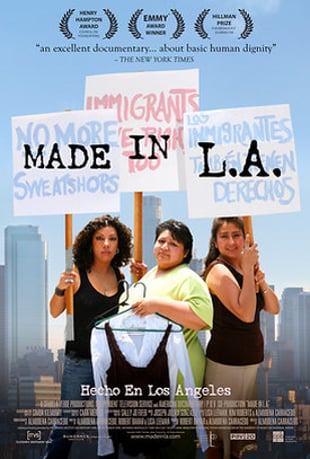
Made in L.A. at the Tel Aviv Cinemateque
Made in L.A. was just screened in Israel at two special events. On March 8 at the Jerusalem Cinemateque in celebration of International Women's Day, and on March 11 in the Tel Aviv Cinematheque -as part of a lecture and film series organized by the Social Economic Academy (SEA), titled "Work and workers in the cinema". This screening was titled: "Change is possible, even today".
Dana Ron, who, along with Oded Goldreich, has been the driving force behind these screenings ever since she saw Made in L.A. at the Docaviv International Documentary Film festival, sent me a few words about Made in L.A.'s screening in Tel Aviv:
"The SEA is an Israeli non-profit organization whose goal is to promote alternative discourse on social economic issues. The activities of the SEA are directed to expand the knowledge of the public at large and social activists in particular. The SEA offers people both the theory and the critical tools needed to promote economic alternatives, as well as creating an opportunity for these people to engage in dialogue and to encounter different members of Israeli society. Furthermore, SEA encourages its students to become involved in actions that will lead to changes in social-economic policy.
The lecture that preceded the film was given by Sharon Avraham-Weiss. Sharon is a lawyer whose expertise are in social-economic rights. Until recently she worked for the Association for human rights in Israel, and she now teaches at the academic center for law and business. The lecture focused on the mechanism of indirect employment, which currently thrives in Israel. Parallels were displayed between the "rationals of abuse" in Israel and in L.A., and the demand for responsibility of those who benefit from the work of the (exploited) workers were discussed. In particular, it was noted that in Israel, the primary indirect employer of low-wage workers (mostly cleaners and security workers) is the government and its various agencies.
In the current gloomy social landscape in Israel, the depiction of the empowerment process that Lupe, Maura and Maria underwent in their years of struggle was inspiring and uplifting..."